Schneider Axiom Institute
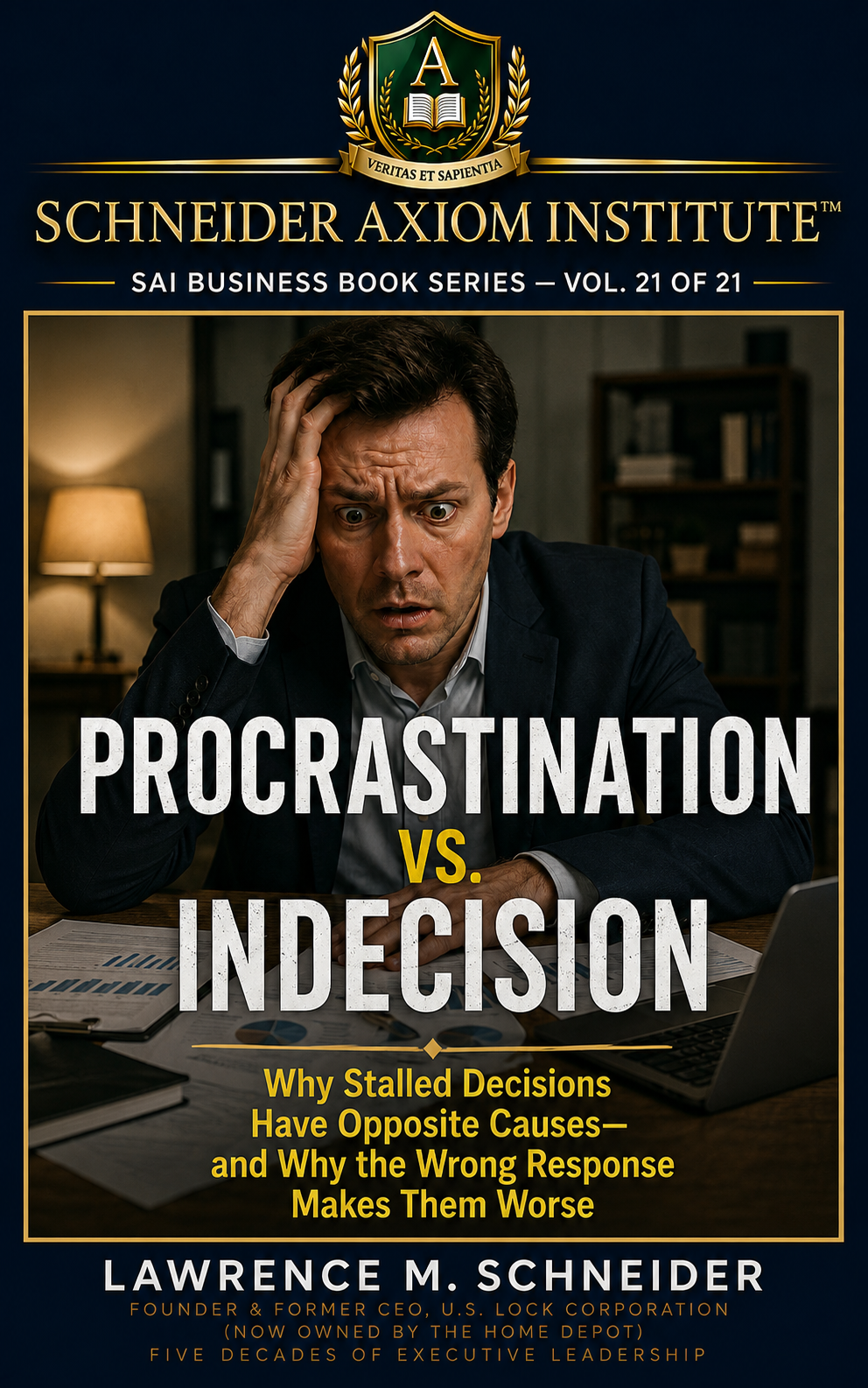
Vol 21 - Procrastination vs Indecision by Lawrence M. Schneider
Vol 21 - Procrastination vs Indecision by Lawrence M. Schneider
Couldn't load pickup availability
The deadline moves again.
The person says one more input is required. The leader hears avoidance. Another meeting is scheduled, more pressure is added, or more analysis is supplied. The decision remains
open.
The visible symptom is the same. The governing cause may be opposite.
Procrastination vs. Indecision explains why a stalled decision must be diagnosed before leaders choose the intervention. Procrastination exists when sufficient readiness is present
but action is deferred because the task, conflict, exposure, consequence, or work is being avoided. Indecision exists when responsible action cannot yet be selected because a
necessary condition—criteria, evidence, authority, agreement, capacity, or a defined tradeoff—is genuinely missing.
Pressure can help the first condition. Applied to the second, it manufactures certainty the system has not earned. More information can help the second condition. Applied to the first,
it becomes an Avoidance Subsidy that allows delay to look professional.
Lawrence M. Schneider develops the Missing-Piece Test: If the claimed missing piece arrived right now in an acceptable form, would the action begin immediately? A credible yes
supports a readiness-gap hypothesis. A credible no points away from the stated explanation and toward an action gap, hidden disagreement, authority vacancy, or another unspoken
cause.
The book distinguishes six conditions commonly collapsed into the word delay: procrastination, indecision, deliberation, waiting, disagreement, and authority vacancy. It examines
moving deadlines, false closure, moving missing pieces, witnessed-failure exposure, the Not-Yet Loop, execution aversion, criteria gaps, disagreement concealment, ownerless
decisions, collective stalls, and the system-level map of a stalled choice.
Share